


LIVE STREAMING FEB. 22, 2026 | 3:30 P.M.
L’ITALIANA IN ALGERI
Music by Gioachino Rossini
Playful drama
Libretto by Angelo Anelli
Mustafà Giorgio Caoduro
Elvira Gloria Tronel
Zulma Barbara Skora
Haly Giuseppe De Luca
Lindoro Ruzil Gatin
Isabella Laura Verrecchia
Taddeo Marco Filippo Romano
Conductor Alessandro Cadario
Director Fabio Cherstich
Sets Nicolas Bovey
Costumes Arthur Arbesser
Lights Alessandro Pasqualini
ORCHESTRA OF EMILIA-ROMAGNA ARTURO TOSCANINI
CLAUDIO MERULO CHOIR OF REGGIO EMILIA
Choirmaster Martino Faggiani
NEW PRODUCTION
Coproduction Fondazione I Teatri di Reggio Emilia, Fondazione Teatri di Piacenza, Fondazione Teatro Comunale di Modena, Fondazione Ravenna Manifestazioni/Teatro Alighieri, Fondazione Haydn di Trento e Bolzano, Teatri di Operalombardia
This staging of L’Italiana in Algeri stems from the desire to physically, theatrically restore the irrepressible energy of Rossini’s music. A comic, overwhelming, explosive energy, composed of accumulations, bursts, short circuits, rhythmic traps and sudden detonations. It is a stage machine built to spin out of control, where the grotesque is not an aesthetic but a lens: the characters are overtly stereotyped, exaggerated, deformed masks.
The setting is contemporary but unreal: a villa under construction – or perhaps never completed – in an indefinite, sun-drenched, timeless place. A space that contains everything but ensures nothing. Stolen or forgotten objects coexist with construction materials: sofas, deck chairs, office chairs turned into thrones, wheelbarrows repurposed as means of transport or bins elevated to ceremonial pedestals. The characters inhabit it naturally, as if it had always been this way: it is the distance between the chaos we see and the ease with which they traverse it that generates the comic.
Fabio Cherstich, director
On the musical level, a structural debt to Mozart’s lesson emerges: not so much in a more recognizable stylistic continuity, but in a deeper “theatrical mechanics” in the connotation of characters through music. An emblematic example is the beginning of Act I: Zulma, in order to persuade Elvira to accept Mustafà’s wishes, first imitates his figuration and then leads her on her own melody, in a dynamic of persuasion reminiscent of the relationship between Susanna and Figaro in the first duet of The Marriage of Figaro. These foundations provide the interpretive starting point, but without exhausting the Pesaro composer’s identity, which is distinguished by distinctive and original elements.
Alessandro Cadario, conductor
EXTRA
LIVE FROM.
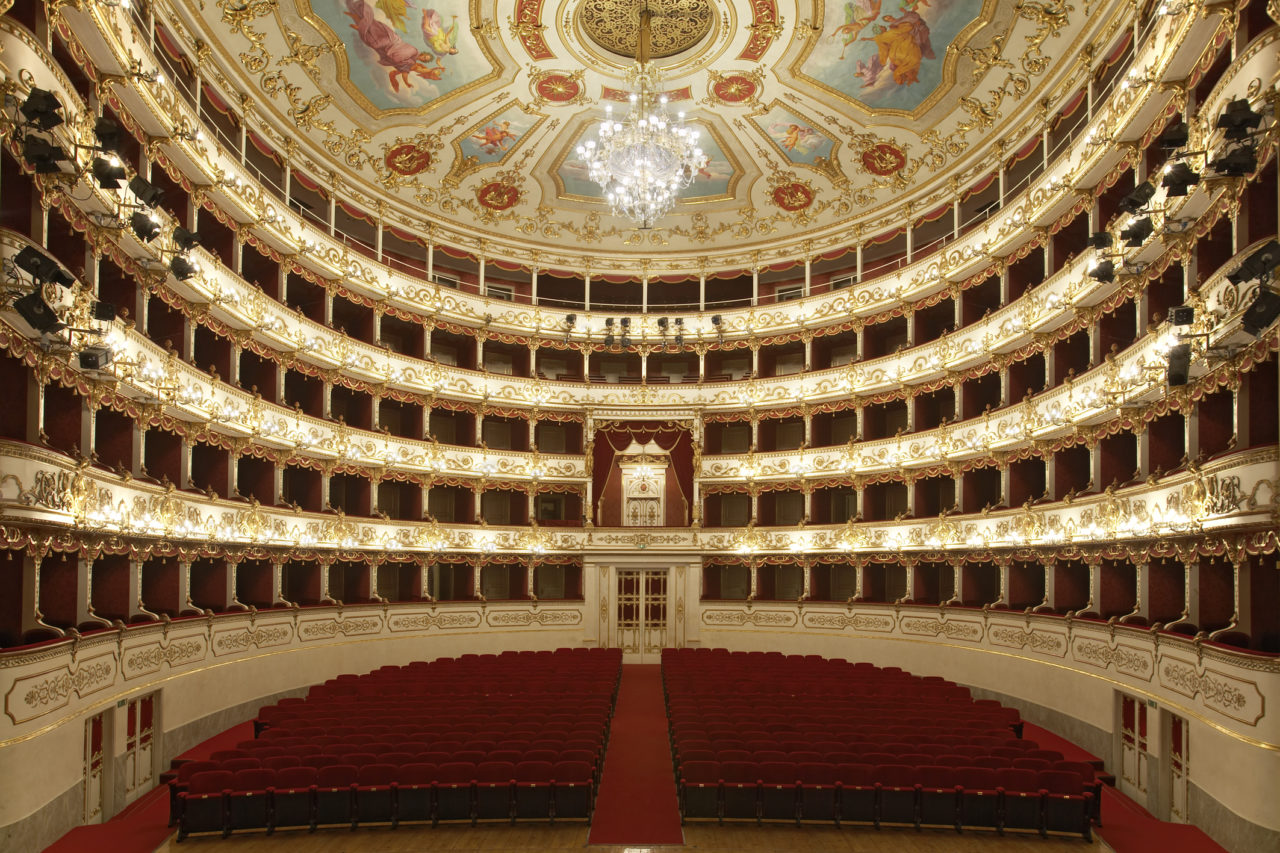
VALLI THEATRE REGGIO EMILIA
The majestic Teatro Municipale Valli, surrounded by public gardens, covers an area of 3,890 square metres. Every year, it hosts a prestigious opera and concert season, as well as a rich programme of dance, musicals and musical theatre performances. It has a media library and a historical discotheque open to the public. The complex was built between 1852 and 1857, according to the design of Modena architect Cesare Costa, and today appears virtually unchanged from the time of its inauguration. In 1980, it was dedicated to the Reggio Emilia actor Romolo Valli.


