
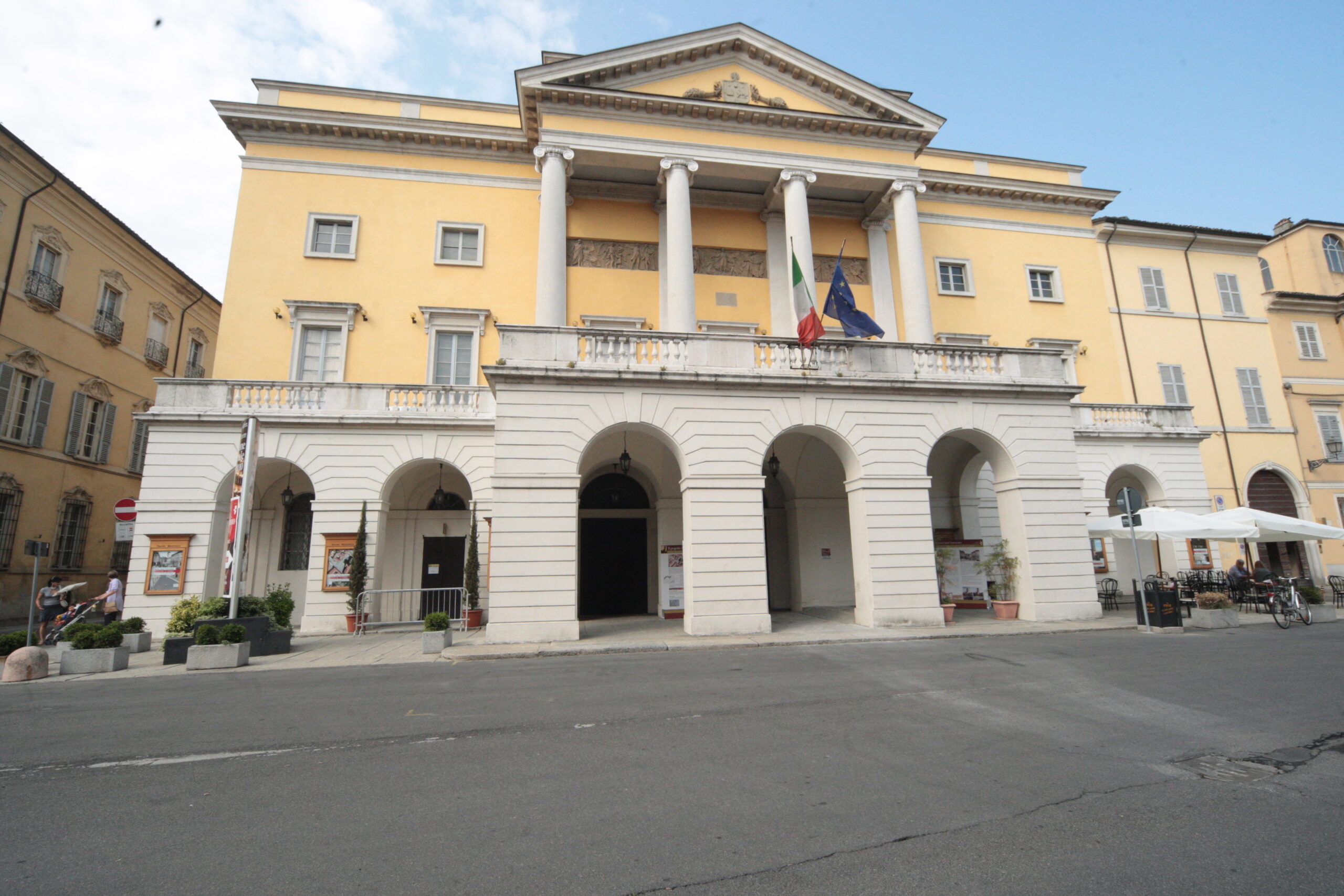
One of the indicators of a city’s quality of life is the Theatre. All communities with a functioning theatre enjoy a privileged situation, benefiting from a tool that, by its nature, is a school of human and cultural growth. The Municipal Theatre of Piacenza, in addition to being one of the oldest historic theatres in the world, is among the 28 Theatres of Tradition recognized by MIBACT. A splendid example of late 18th-century architecture, the Municipal Theatre of Piacenza was inaugurated on September 10, 1804, with Zamori, or the Hero of the Indies, a serious drama for music by Giovanni Simone Mayr, a Bavarian musician who lived for a long time in Italy in Bergamo and was the teacher of Gaetano Donizetti. The construction of the theatre, designed by the Piacenza architect Lotario Tomba (also the author of the Governor’s Palace in Piazza Cavalli), began in September 1803 and was completed the following year.
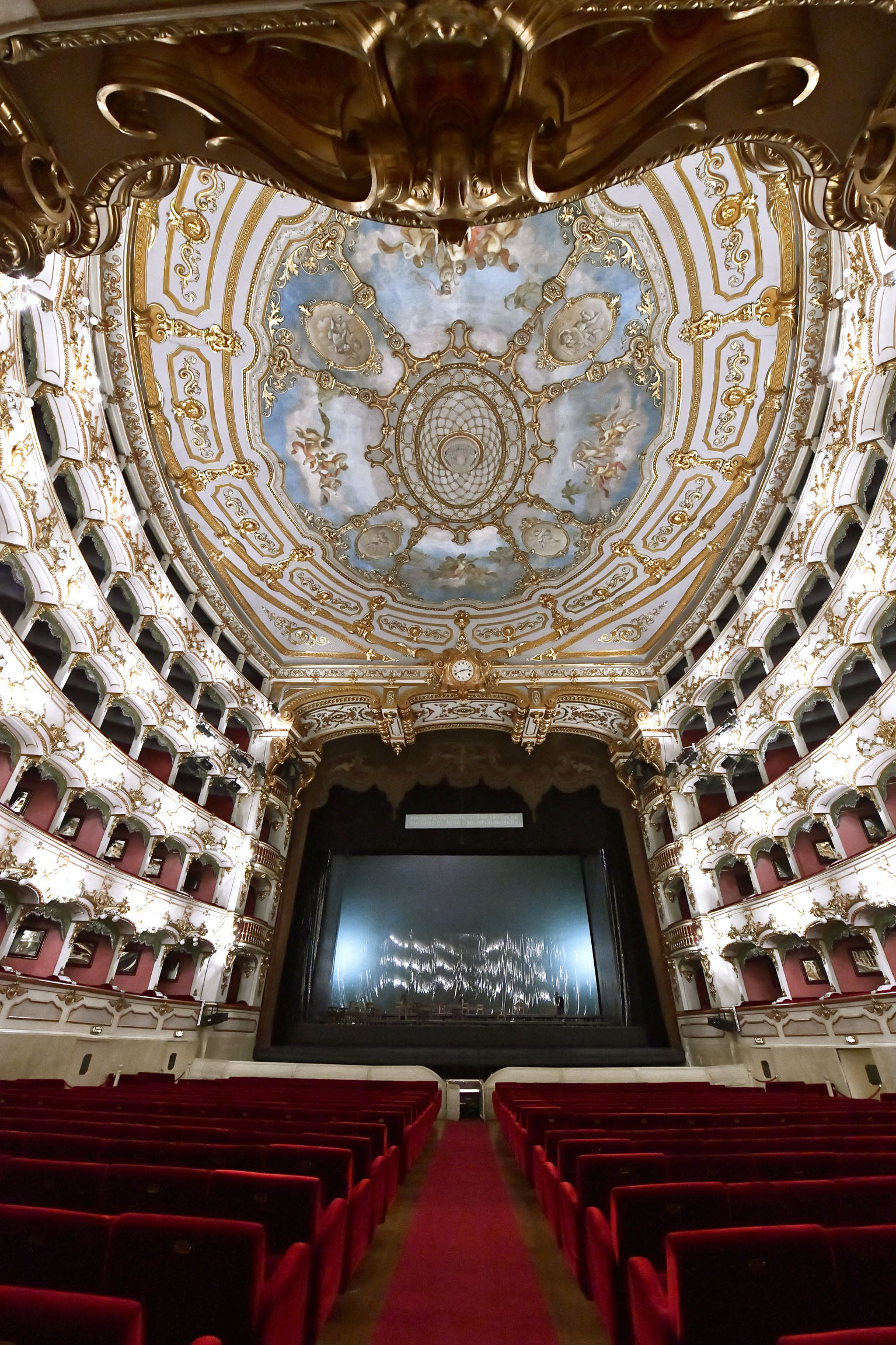
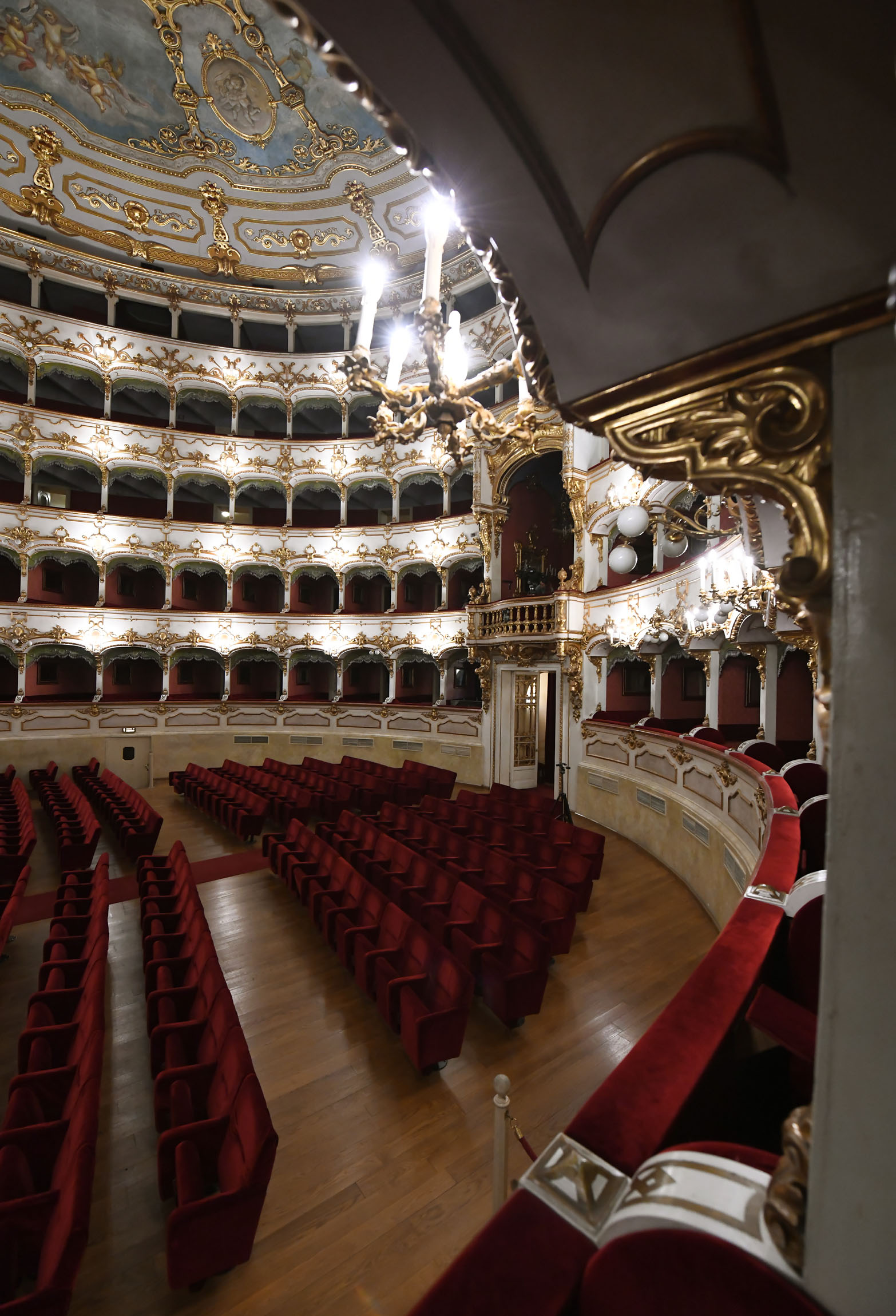
Piacenza was the first in Emilia to have a new, modernly conceived, spacious, and, above all, beautiful theatre. Parma would have it in 1829, Modena in 1838, Reggio Emilia in 1857. The “three-quarters ellipse” shape of the hall, invented by Lotario Tomba after careful studies, was the innovation that revolutionized the principles on which European theatre architecture had been based until then, adopting the “U” or “horseshoe” shape. In addition to respecting the laws of physics (excellent acoustics), the “three-quarters ellipse” layout also enhances the aesthetics of the hall, giving it an elegant momentum. Qualities that did not escape the eyes of an attentive traveler like Stendhal, who passed through Piacenza in 1816; the illustrious French writer had words of admiration for the theatre, calling it “Among the most beautiful, indeed the most beautiful in Italy”.
PIACENZA
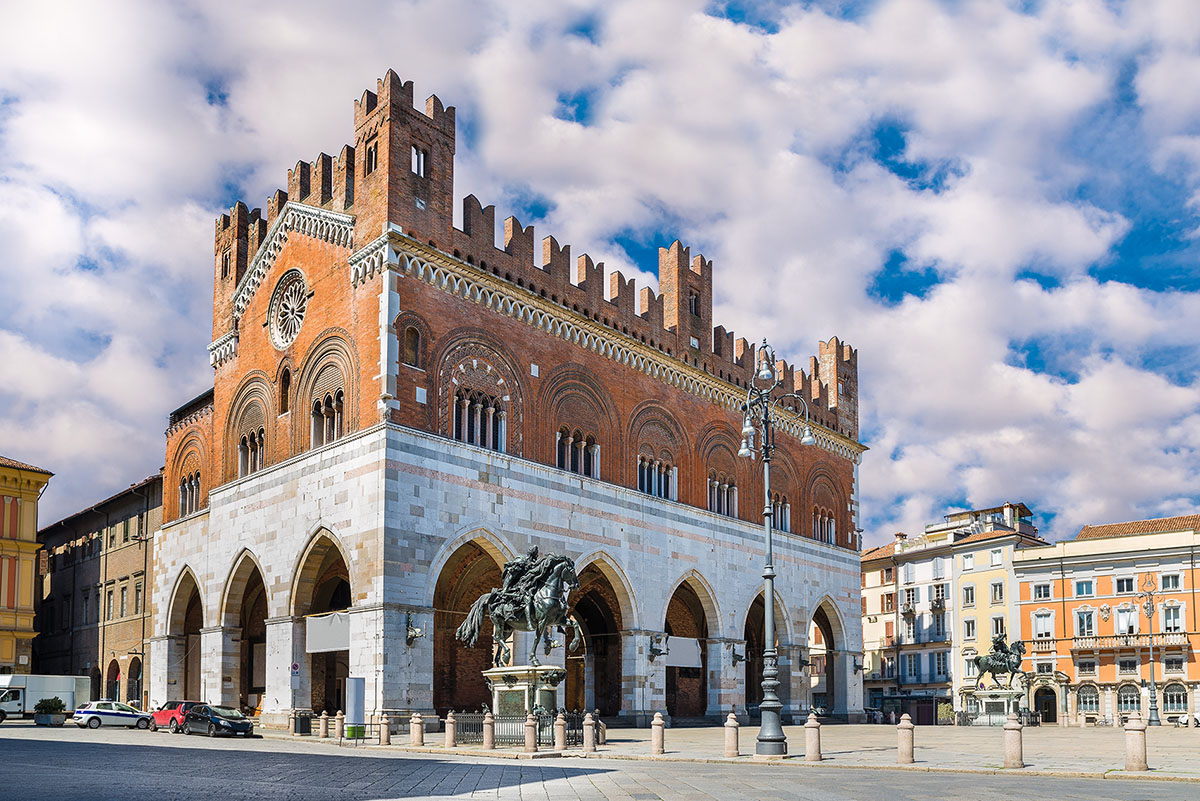
“Piacenza is a land of passage” wrote Leonardo Da Vinci in the Codex Atlanticus. Due to its very location, at the crossroads of four regions, it is indeed the gateway to Emilia, founded on the banks of the Po and enclosed in the embrace of the hills and mountains of the Apennines. A Roman colony, later an important medieval center, it has always been an ideal stopover for the passage of princes and pilgrims, crusaders and Templars, merchants and artists who left their mark here.


