

LIVE STREAMING MAY 16, 2021 - 6:00 PM CET
Requiem Mass
Music by Giuseppe Verdi
For Soloists, Choir, and Orchestra.
Conductor Plácido Domingo
Soprano María José Siri
Mezzo-soprano Annalisa Stroppa
Tenor Antonio Poli
Bass Michele Pertusi
ARTURO TOSCANINI PHILHARMONIC
CHORUS OF THE MUNICIPAL THEATER OF PIACENZA
Chorus Master Corrado Casati
Production Teatro Municipale di Piacenza
Maestro Domingo, a legendary tenor in the international opera scene, will return to Piacenza after almost fifty years: in 1972 he sang at the Municipale for the premiere of Lucia di Lammermoor. On Sunday the 16th, he will take the podium to conduct the grand Verdian masterpiece of sacred music, leading the Arturo Toscanini Philharmonic and the Choir of the Teatro Municipale di Piacenza, prepared by Corrado Casati. Four internationally renowned soloists will be featured: soprano Maria José Siri, mezzo-soprano Annalisa Stroppa, tenor Antonio Poli, and bass Michele Pertusi. The event will also be broadcast live, available for free worldwide, thanks to OperaStreaming. Preceding the performance of the Requiem, behind the soloists, the Orchestra, and the Choir, a large screen will be placed to project symbolic images that retrace the memory between places and people of the pandemic in Piacenza, one of the cities most affected by the first wave of Covid, with a documentary video made by Blacklemon, directed by Andrea Pasquali.
EXTRA
LIVE FROM.
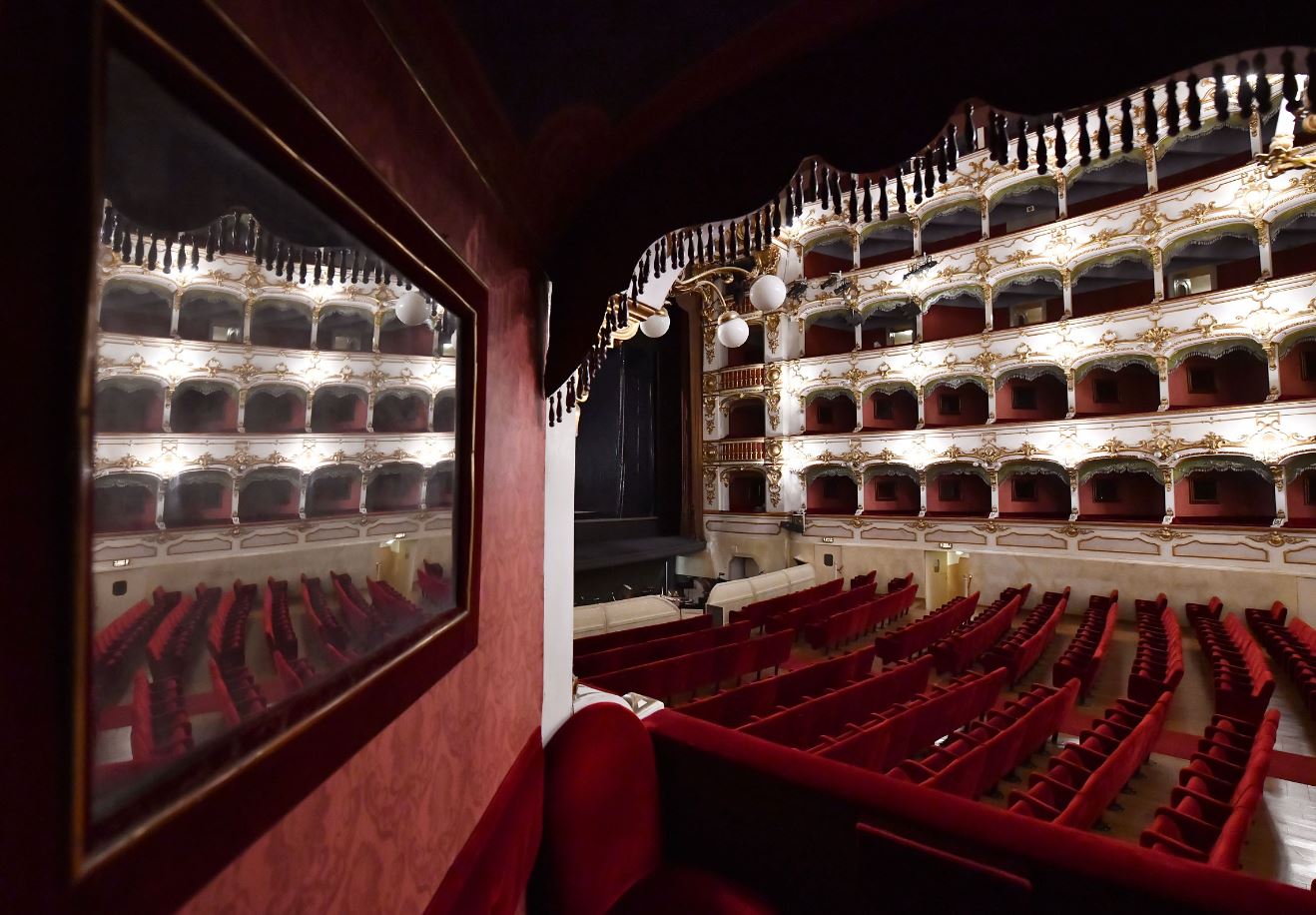
MUNICIPAL THEATRE OF PIACENZA
A splendid example of late 18th-century architecture, Piacenza’s Municipal Theater was inaugurated on September 10, 1804, with Zamori, or Hero of the Indies, a dramma serio for music by Giovanni Simone Mayr, a Bavarian musician who was Gaetano Donizetti’s teacher and who lived for a long time in Bergamo.
Construction of the theater, designed by Piacenza architect Lotario Tomba (author, among other things, of the Governor’s Palace in Piazza Cavalli) began in September 1803 and was completed the following year.
Piacenza was the first city in Emilia to have a new, modernly conceived, capacious and, above all, beautiful theater; Parma would have it in 1829, Modena in 1838, Reggio Emilia in 1857.


