
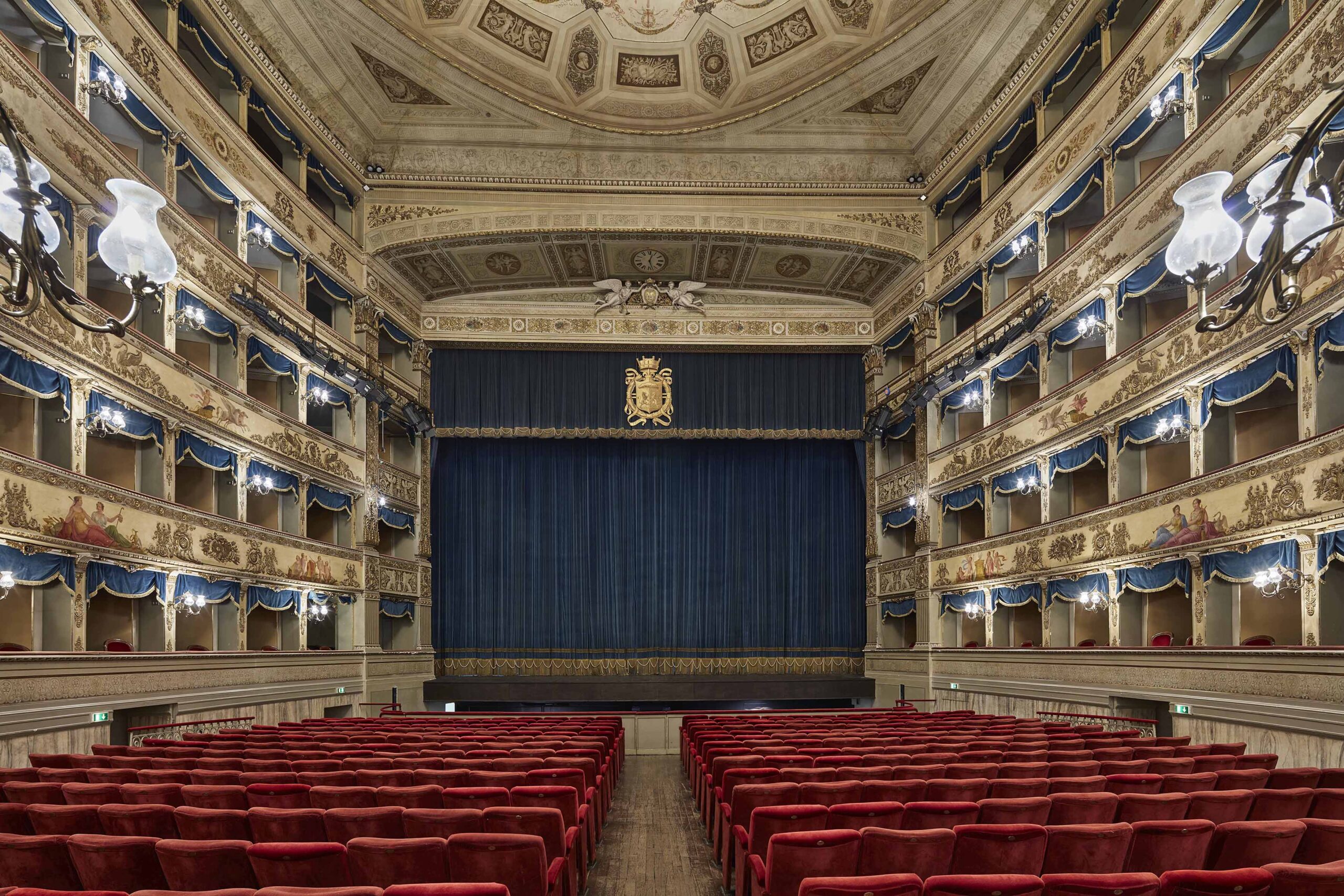
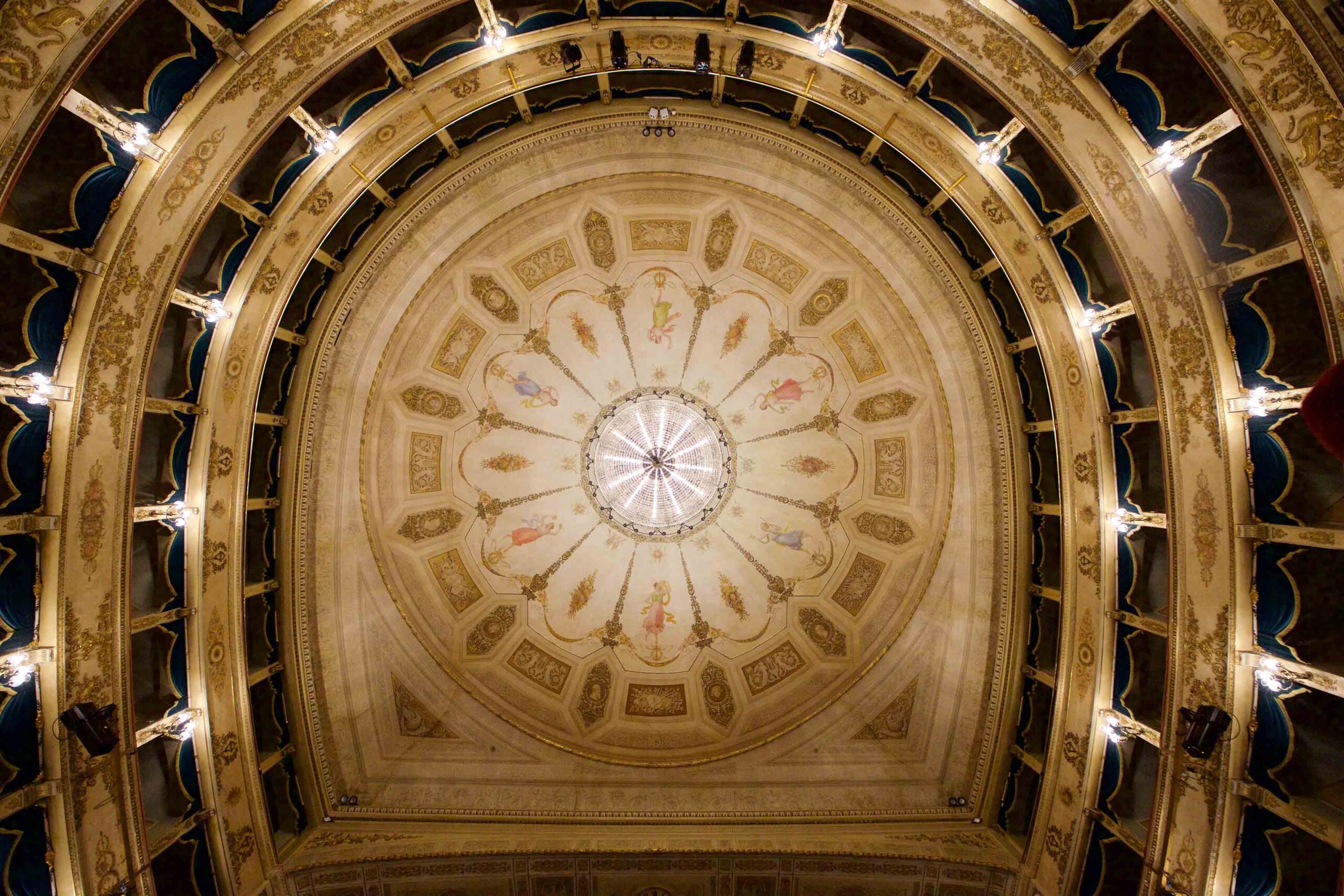
Early decades of the 19th century: after over a hundred years, the Communicative Theatre, entirely made of wood, is deteriorating, and the Civic Administration decides to build a new structure. Meanwhile, a suitable location must be found, and the choice falls on Piazzetta degli Svizzeri, shabby and surrounded by shanties, but right in the city center. In 1838, the project is entrusted to two Venetian architects, the Meduna brothers, Tomaso and Giovan Batista. The former oversaw the restoration of the Teatro La Fenice in Venice, which was partially destroyed by a fire. He also designed the first railway bridge connecting Venice to the mainland. Thus, a neoclassical building is born, similar in many respects to the Venetian theatre. It is the apostolic delegate, Monsignor Stefano Rossi, who suggests dedicating it to Dante Alighieri.
The official inauguration takes place on May 15, 1852, with Giacomo Meyerbeer’s “Robert the Devil” and the ballets “The Gypsy” and “The Fake Sleepwalker” featuring the star Augusta Maywood. In almost two centuries of existence, the orchestra pit, stage, and auditorium have hosted personalities from all over the world, making it impossible to list them all. However, two curiosities can be mentioned: the presence of Benedetto Croce with his companion, never wife, Angelina Zampanelli at a recital by Ermete Zacconi in 1899. Then the arrival of Gabriele D’Annunzio with Eleonora Duse on May 27, 1902, for “Tristan and Isolde.” That evening, the proceeds were in favor of the Civil Hospital, and the Poet immediately announced a donation of 100 lire. An orchestra seat cost 4 lire. In 1959, the theatre was closed for structural consolidation work; it reopened after eight years, beginning the quality journey that has led it to today’s splendor and international renown. On February 10, 2004, the “Ridotto” was dedicated to Arcangelo Corelli, on the occasion of the 350th anniversary of the great composer from Fusignano’s birth.
RAVENNA
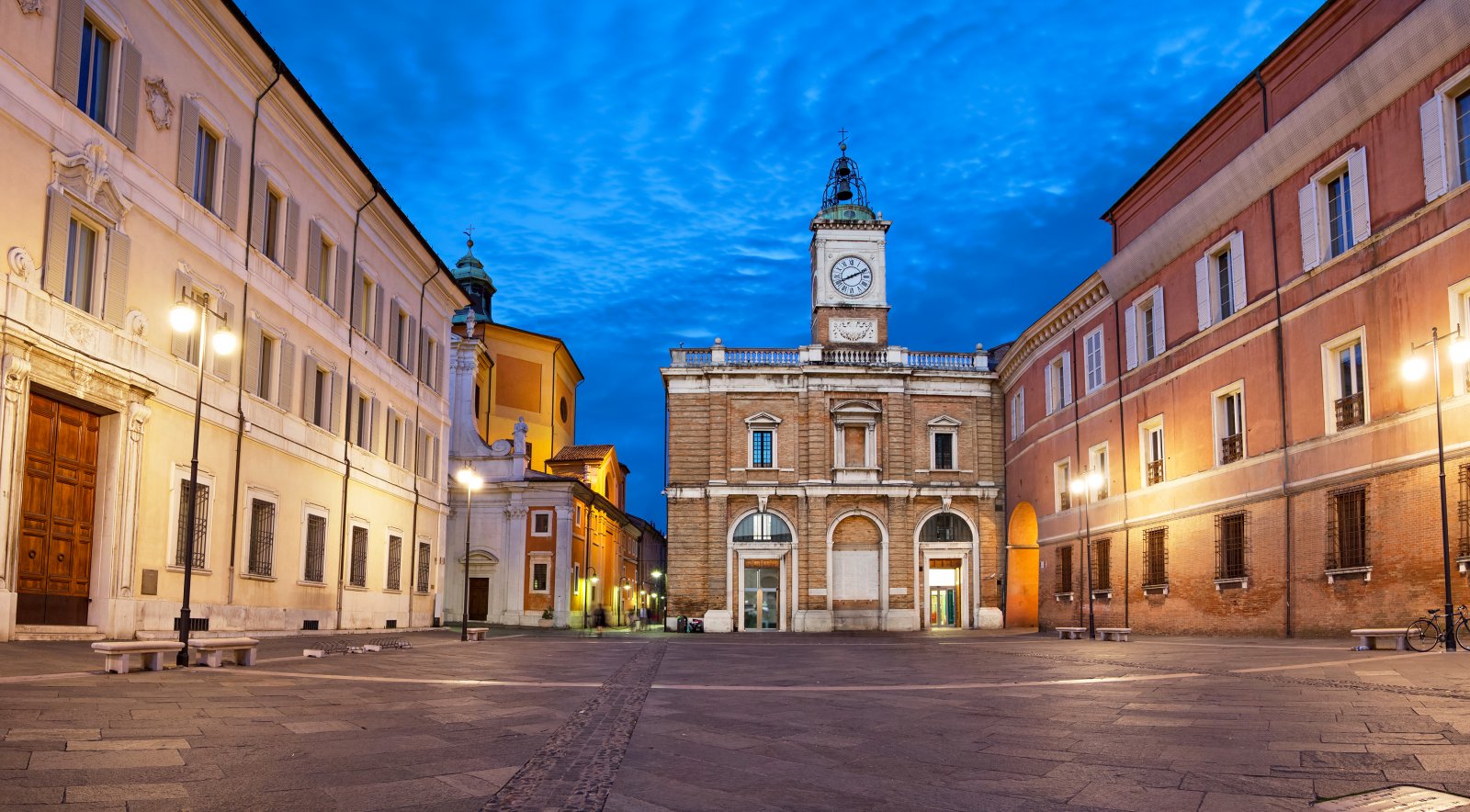
Ravenna is a fascinating city a few kilometers from the sea, known as the “City of Mosaics.” It is a city with ancient origins and a glorious past, evidenced by the precious mosaics inside buildings dating back to the Byzantine era. Eight of these monuments are included in the UNESCO World Heritage list, among which the Basilica of San Vitale stands out, a masterpiece of 6th-century Byzantine art.
In addition to the monuments of inestimable cultural value, the territory of Ravenna maintains unique natural environments, included within the Po Delta Park.


